
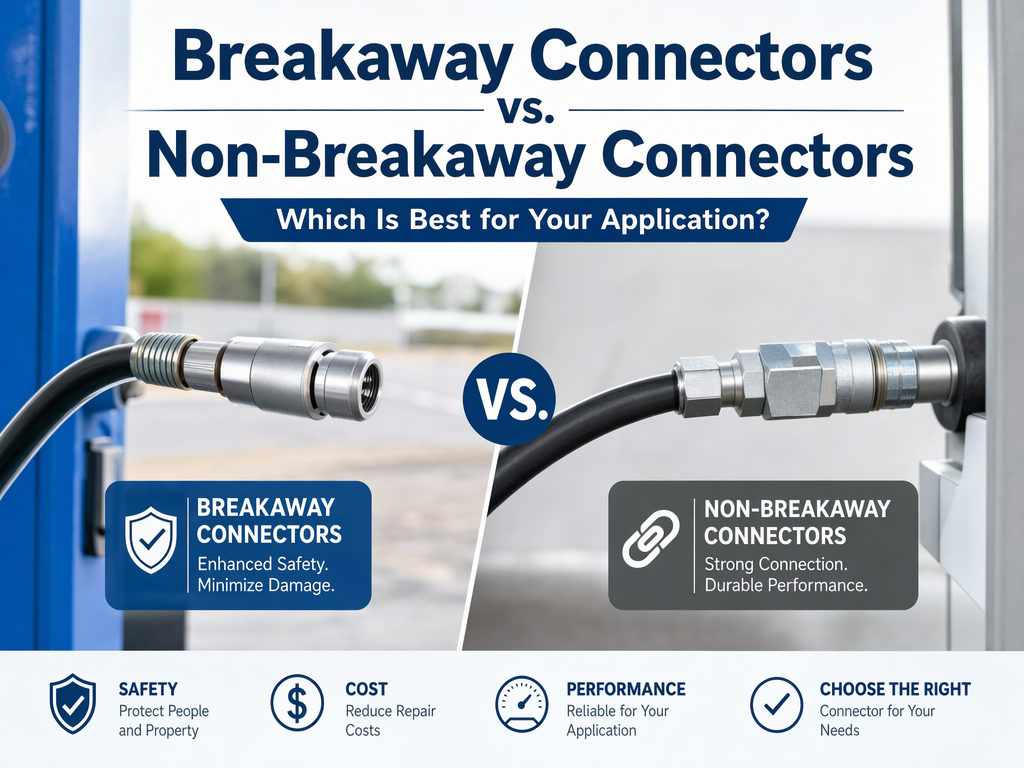
Choosing the right electrical connector is about more than current ratings and pin count. In many industrial, medical, robotic, and portable electronic applications, the way a connector behaves when subjected to accidental pulling or excessive force can significantly impact equipment reliability, maintenance costs, and user safety.
One of the most important design decisions is whether to use a breakaway connector or a traditional non-breakaway connector.
In this guide, we’ll explain how each connector type works, compare their advantages and disadvantages, and discuss why magnetic breakaway connectors are becoming a preferred solution for modern equipment.
What Is a Breakaway Connector?
A breakaway connector is designed to disconnect safely when a pulling force exceeds a predetermined level. Instead of allowing excessive stress to damage cables, connectors, or equipment, the connector releases while maintaining the integrity of both mating halves.
Breakaway connectors are commonly used where accidental cable pulls are likely or where equipment needs to disconnect quickly without causing damage.
Common Applications
- Medical equipment
- Robotics
- Industrial automation
- Portable electronic devices
- Test and measurement equipment
- Battery-powered systems
- Mobile machinery
The primary goal is to protect both the equipment and the operator while reducing downtime caused by damaged connectors.
What Is a Non-Breakaway Connector?
A non-breakaway connector uses a rigid mechanical locking mechanism such as screws, clips, bayonet locks, or latches. These connectors are designed to remain securely connected until intentionally disconnected by the user.
They are commonly selected when maintaining a permanent, vibration-resistant connection is more important than quick release.
Common Applications
- Industrial control cabinets
- Heavy machinery
- Power distribution
- Fixed installations
- Telecommunications equipment
- Automotive wiring
- Aerospace systems
Non-breakaway connectors provide excellent retention but may transfer excessive force to the cable or equipment if pulled unexpectedly.
Comparing Breakaway and Non-Breakaway Connectors
| Feature | Breakaway Connector | Non-Breakaway Connector |
| Disconnects under excessive force | ✔ Yes | ✘ No |
| Protects equipment from accidental cable pulls | ✔ Yes | Limited |
| Mechanical retention | Moderate | High |
| Quick reconnect | Excellent | Moderate |
| Risk of cable damage | Low | Higher under excessive force |
| User-friendly operation | Excellent | Good |
| Best for frequent connections | ✔ Yes | Depends on design |
Both connector styles have their place, and the right choice depends on the application.
Advantages of Breakaway Connectors
Protect Equipment
One accidental cable pull can damage expensive equipment, bend connector pins, or require replacing an entire cable assembly.
A breakaway connector separates before damaging the equipment, reducing repair costs and downtime.
Improve User Safety
In environments where operators frequently move equipment or cables, a connector that releases under excessive tension can reduce tripping hazards and minimize the risk of equipment being pulled from workstations.
This is particularly valuable in laboratories, healthcare environments, and manufacturing facilities.
Faster Connection and Disconnection
Many breakaway connectors are designed for quick, tool-free operation.
Users can connect and disconnect equipment rapidly without manipulating locking screws or release tabs.
Reduce Maintenance Costs
Traditional connectors can wear over time due to repeated insertion, bent pins, or damaged locking mechanisms.
Properly designed breakaway connectors help minimize mechanical stress, potentially extending the service life of both the connector and the attached equipment.
When a Non-Breakaway Connector Is the Better Choice
Traditional connectors remain the preferred solution in many applications.
They are often better suited for:
- High-current power transmission
- Permanent equipment installations
- Applications requiring maximum pull-out resistance
- Harsh environments where a positive locking mechanism is mandatory
- Equipment that should never disconnect unintentionally
For these applications, a locking connector provides maximum mechanical security.
Magnetic Breakaway Connectors: Combining Reliability and Convenience
One of the most popular forms of breakaway technology today is the magnetic connector.
Instead of relying on mechanical latches or threaded couplings, magnetic connectors use permanent magnets to guide and retain the connection.
When excessive force is applied, the magnetic coupling releases cleanly, helping prevent damage to the cable, connector, or equipment.
Additional benefits include:
- Self-aligning connections
- Fast connection and disconnection
- Reduced risk of bent contact pins
- Fewer moving mechanical parts
- Improved user experience
- Consistent electrical contact through spring-loaded pogo pins (in compatible designs)
Because of these advantages, magnetic breakaway connectors are increasingly used in equipment that requires frequent connection cycles.
Where MagnaPlug Fits
For low-voltage industrial and electronic applications, MagnaPlug offers an alternative to conventional locking connectors by combining magnetic alignment with spring-loaded pogo pin technology.
Rather than relying on rigid locking hardware, MagnaPlug is designed to connect quickly, maintain reliable electrical contact, and release when excessive force is applied. This can help reduce stress on connected equipment during accidental cable pulls while making routine connection and disconnection faster and easier.
MagnaPlug is well suited for applications carrying:
- Low-voltage power (up to 48 V DC)
- Ethernet communications
- Control signals
- 4–20 mA instrumentation
- Single or dual RTD probes
- Thermocouple circuits
- Custom industrial cable assemblies
Its compact inline design also makes it attractive for robotics, industrial automation, medical devices, portable equipment, and test systems where connector durability and ease of use are important.
How to Choose the Right Connector
Before selecting a connector, ask the following questions:
- Will the cable be connected and disconnected frequently?
- Could accidental cable pulls occur?
- Is equipment protection a priority?
- Does the application require quick maintenance?
- Is positive mechanical locking required?
- Will operators benefit from faster, tool-free connections?
If preventing damage from accidental disconnects is important, a breakaway connector may provide significant advantages over a traditional locking connector.
Final Thoughts
Both breakaway and non-breakaway connectors play an important role in modern electrical systems.
Traditional locking connectors remain the best choice when maximum mechanical retention is required. However, in applications where accidental cable pulls, ease of maintenance, and equipment protection are important, breakaway connectors offer clear advantages.
Magnetic breakaway connectors take this concept even further by combining automatic alignment, reliable electrical performance, and controlled release in a compact design.
For engineers designing next-generation industrial equipment, robotics, medical devices, or portable electronics, solutions such as MagnaPlug provide an innovative approach to creating durable, user-friendly cable connections while helping protect valuable equipment from accidental damage.


